WASHINGTON (TND) — For too many Americans, the drugs prescribed by their doctor are out of reach.
U.S. Senators are taking on the high cost of prescription drugs and working to find a solution to bring down costs.
The CEOs of Merck, Johnson & Johnson and Bristol Byers Squibb appeared before senators Thursday to defend their prices.
The cost of prescription drugs, it's like a bag of heavy rocks," Sen. Bob Casey, D-Penn., said.
The CEOs also spoke about why Americans pay more than other nations for the same drugs.
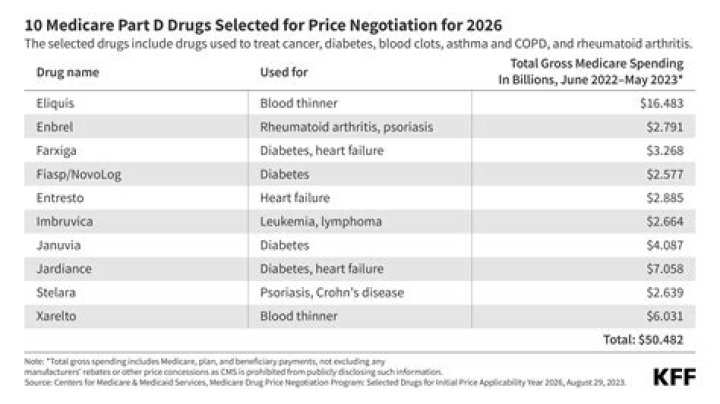
“Johnson & Johnson charges Americans with arthritis $79,000 for Stelara when that same exact product can be purchased for just $20,000 in Canada," Health, Education, Labor and Pensions Committee Chairman Sen. Bernie Sanders said.
Some claim that America is paying for innovation for the rest of the world when it comes to prescription drugs.
"Yeah, that seems pretty much it," Sen. Bill Cassidy, R-La., said.
According to CDC research published last summer, more than 8% of adults aged 18 to 64 skipped their necessary, prescribed medication because of the cost. Those in fair or poor health, and those with disabilities were about three times more likely to go without the medication.
We’re focusing on prices today but we also need to think about innovation as a way to fix the problem," Merck CEO Robert Davis said.
Lawmakers of bother parties grilled the CEOs for spending more on stock buybacks and dividends than developing new drugs. As for a solution, that's where Congress remains split.
“I totally agree with that. The one thing that we gotta understand, it takes a lot of money to come up with new drugs," Sen. Tommy Tuberbille, R-Ala., said of constituents in his state who cannot afford their prescription drugs.
We need to ramp up the number of drugs that are being negotiated," Sen. Tammy Baldwin, D-Wis., said. “We need to make sure that Medicare is getting a fair price.
Drug makers blame pharmacy benefit managers (PBMs), who serve as intermediaries between insurance, pharmacies and pharmaceutical companies, calling them out in ads: “I don’t make as much money off this one. Hope you feel better.”
Both sides spent tens of millions of dollars last year lobbying Congress, according to public filings.
I think the healthcare lobbies are the strongest back home in our own states and out here in D.C.," Sen. Mike Braun, R-Ind., said.
It's done little to help the one in four Americans who, according to the Kaiser Family Foundation, say it's difficult to afford their medication.
